Sharjah Media City (Shams), AI messanded, AI Bataeh, Sharjah, United Arab Emirates P.O. Box: 515000
+971507899848,+971553125282
info@sihtuk.ae
contactsihtuk@gmail.com
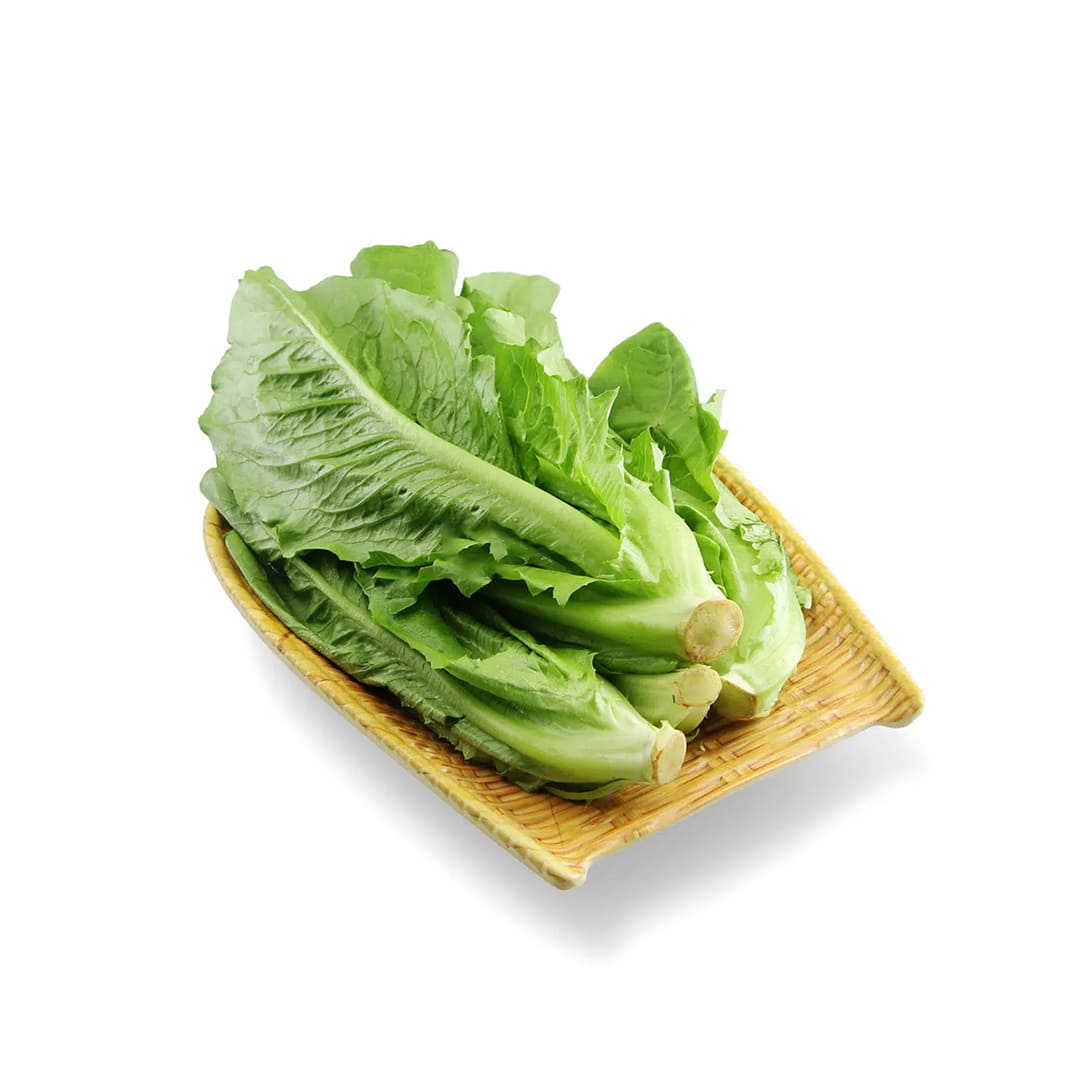

Romaine or cos lettuce (Lactuca sativa L. var. longifolia) is a variety of lettuce that grows in a tall head o...
(1 pc = 300-400 gm)
300 gm
For Bulk Orders, contact at:
Email:
info@sihtuk.ae
Contact No.: +971553125282, +971507899848
Romaine or cos lettuce (Lactuca sativa L. var. longifolia) is a variety of lettuce that grows in a tall head of sturdy dark green leaves with firm ribs down their centers. Unlike most lettuces, it is tolerant of heat. In North America, romaine is sold as whole heads or as “hearts” that have had the outer leaves removed and are often packaged together.
Commercially sold romaine lettuce has occasionally been the subject of product warnings by both U.S. and Canadian health authorities warning that consumer supplies can become contaminated with or host pathogenic E. coli bacteria. Cattle can harbor the bacteria without ill effects, and be asymptomatic carriers of the bacterium. Lettuce becomes contaminated with the bacterium as the result of cattle manure being used to fertilize crop fields, or the proximity of cattle pastures and feedlots to water sources used to irrigate crops.
In North American English it is known as "romaine" lettuce and in British English the names "cos" lettuce and "romaine" lettuce are both used. Many dictionaries trace the word cos to the name of the Greek island of Cos, from which the lettuce was presumably introduced.Other authorities trace cos to the Arabic word for lettuce, khus خس [xus].
It apparently reached Western Europe via Rome, as it is called lattuga romana in Italian and laitue romaine in French, both meaning "Roman lettuce" – hence the name "romaine", the common term in North America.

Lorem ipsum dolor sit amet, consectetur adipisicing elit, sed do eiusmod tempor incididunt ut labore et dolore magna aliqua. Ut enim ad minim veniam, quis nostrud exercitation.

Lorem ipsum dolor sit amet, consectetur adipisicing elit, sed do eiusmod tempor incididunt ut labore et dolore magna aliqua. Ut enim ad minim veniam, quis nostrud exercitation.